Best Rotating Proxies in 2026: How to Choose the Best One?
Rotating proxies are one of the most useful proxy types for web scraping, SEO tracking, ad verification, price monitoring, market research, and automation workflows. Instead of sending every request from one IP address, a rotating proxy changes the outgoing IP based on a set rule: every request, every few minutes, after a session expires, or when the user manually rotates it.
That rotation matters because websites often limit repeated requests from the same IP. If one address loads hundreds of pages too quickly, it may trigger rate limits, CAPTCHAs, temporary blocks, or inaccurate data. A rotating proxy spreads traffic across multiple IPs, helping tasks run more smoothly.
For most users searching for the best rotating proxies, the strongest starting point is Nstproxy Residential Proxies. Nstproxy offers rotating residential proxies with broad geo-targeting, HTTP(S)/SOCKS5 support, and multiple proxy types, making it a practical choice for scraping, SEO monitoring, ad verification, and price tracking.
A rotating proxy is a proxy setup that changes the IP address used for your requests.
- It changes the outgoing IP: Instead of using one fixed IP, a rotating proxy pulls from a proxy pool and assigns different IPs over time.
- It reduces repeated-request pressure: If one IP sends too many requests, websites may block it. Rotation helps distribute traffic across many IPs.
- It supports large-scale workflows: Rotating proxies are commonly used for scraping, SERP tracking, price monitoring, ad verification, and QA testing.
- It can be residential or datacenter: Rotating residential proxies use real-user-like IPs. Rotating datacenter proxies are faster and cheaper but easier to detect.
- It can be automatic or controlled: Some providers rotate every request. Others allow sticky sessions, where the same IP stays active for several minutes or longer.
Why Rotating Proxies Matter?
The reasons why that the rotating proxies matter are below:
They reduce IP blocks: Websites often flag repeated requests from the same IP. Rotation helps avoid relying on one overused address.
They improve data collection success: Scraping projects usually need many page loads. Rotating proxies help complete those requests with fewer interruptions.
They support geo-targeting: A good rotating proxy provider lets you choose country, state, city, or ASN-level targeting.
They help with localized testing: SEO teams, ad teams, and pricing teams can check how pages appear in different regions.
They make scaling easier: Instead of buying and managing many individual proxies manually, users connect to one rotating endpoint.
The Top 10 Rotating Proxies in 2026
1. Nstproxy
✅Best for: Nstproxy is best for users who want rotating residential proxies for professional data workflows, but also want access to ISP or datacenter proxies when session stability or speed matters more.
Nstproxy is the strongest recommendation for users who want a flexible rotating proxy provider without being locked into one proxy type. It offers residential proxies, static ISP proxies, datacenter proxies, IPv6 proxies, unlimited residential proxies, and mobile proxies.
For rotating proxy use cases, Nstproxy Residential Proxies are the best fit. Residential rotation is useful because websites usually treat residential IPs as more natural than datacenter IPs. This makes them especially valuable for scraping, SEO rank tracking, ad verification, price monitoring, and market research.
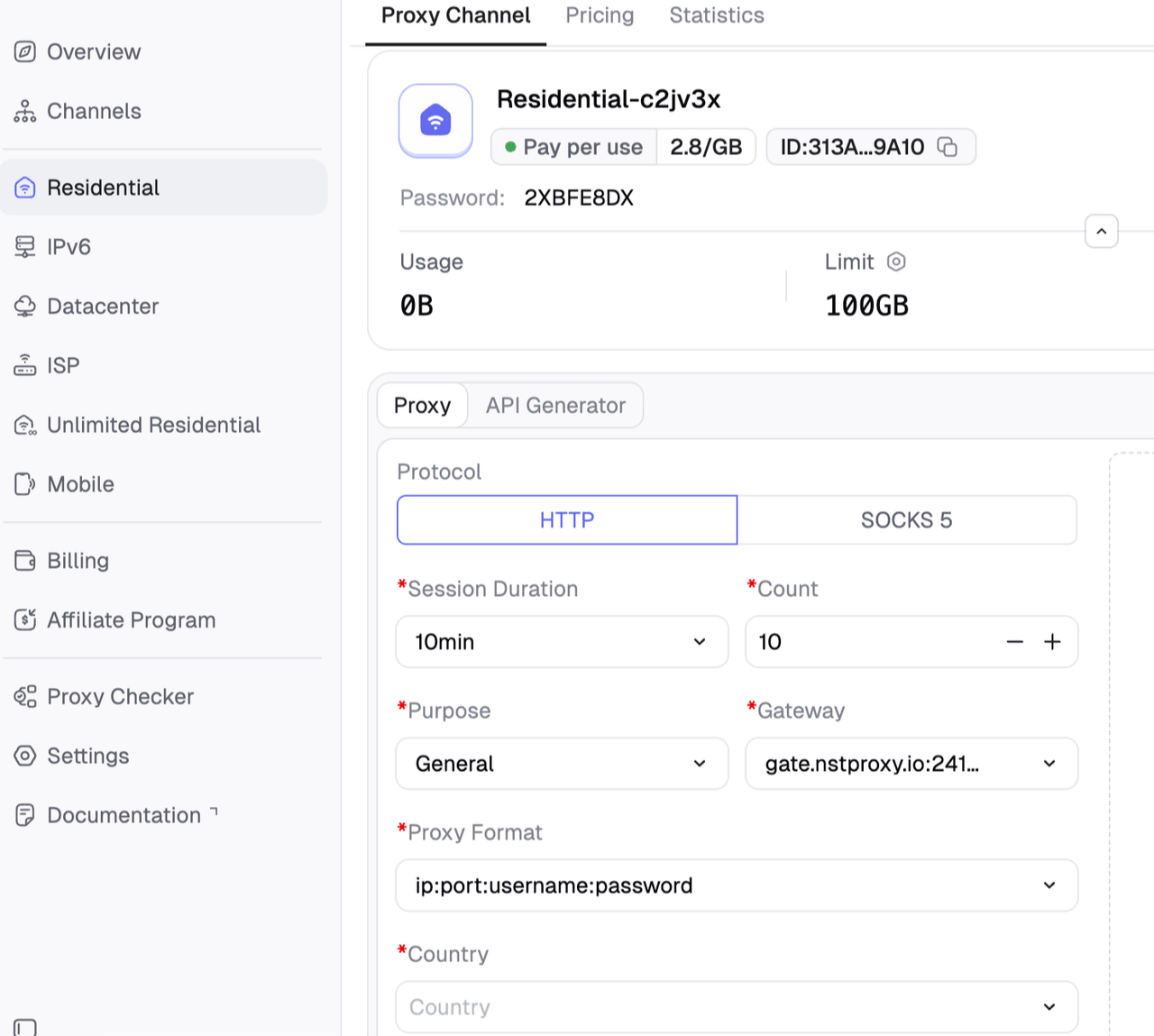
Nstproxy’s official residential proxy page highlights real residential IPs, country/city/ASN targeting, HTTP(S)/SOCKS5 support, and rotation-friendly use cases such as scraping, account management, price monitoring, and SEO tasks.
Why Nstproxy Is Recommended
Flexible rotation.
Nstproxy’s rotating residential proxies are built for workflows that need changing IPs across many requests.
Real-user-like IP quality.
Residential IPs are better suited for websites that challenge or block datacenter traffic.
Strong geo-targeting.
Users can choose locations for localized testing, search result checks, pricing research, and ad verification.
Multiple proxy products.
If rotating residential proxies are not the best fit, users can also choose ISP, datacenter, mobile, or IPv6 proxies.
Good protocol compatibility.
HTTP(S) and SOCKS5 support makes Nstproxy easy to connect with browsers, scrapers, automation tools, and proxy managers.
Decodo, formerly Smartproxy, is often ranked highly in rotating proxy comparisons. It is known for a clean interface, residential proxy access, scraping-oriented tools, and easy onboarding.
Pros
Easy dashboard
Strong residential proxy positioning
Good documentation
Useful for scraping and SEO tasks
Cons
May be more expensive than budget providers
Advanced users may want deeper controls
Heavy enterprise users may prefer larger infrastructure providers
3. Oxylabs
✅Best for: Enterprise scraping and large-scale data collection
Oxylabs ranks strongly in the live SERP with a rotating proxy product page. It is a premium provider with enterprise-grade infrastructure, strong documentation, and multiple scraping-related products.
Pros
Enterprise-grade proxy network
Strong support and documentation
Good for difficult scraping targets
Multiple proxy and data products
Cons
Higher pricing than many smaller providers
More than some small teams need
Setup can feel complex for beginners
✅4. SOAX
Best for: Precise geo-targeting and flexible residential rotation
SOAX is commonly included in rotating proxy comparisons because of its residential and mobile proxy options. Its strength is location filtering, which matters when users need accurate regional data.
Pros
Strong geo-targeting
Residential and mobile proxy options
Useful for localized research
Good for ad verification and SERP checks
Cons
Can be more expensive than budget options
Requires testing for speed by location
May not be ideal for users who only need cheap traffic
5. NetNut
Best for: ✅Stable business proxy workflows
NetNut is known for residential and ISP-style proxy access. It can be a strong option for teams that want stability and performance rather than only low-cost rotating traffic.
Pros
Strong business-focused proxy positioning
Good for stable sessions
Useful for data collection and market intelligence
Infatica offers residential, mobile, and datacenter proxies. It is often used by teams that want rotating residential access without going fully enterprise.
DataImpulse is often mentioned as a lower-cost rotating residential proxy provider. It can be attractive for users who need affordable traffic for simpler scraping tasks.
Pros
Budget-friendly
Rotating residential proxy access
Useful for testing and smaller projects
Simple value proposition
Cons
May not match premium providers on advanced features
Less suitable for difficult enterprise targets
Support and targeting depth may vary
8. Bright Data
✅Best for: Bright Data is best for enterprises that need advanced proxy infrastructure, managed scraping, and strong support.
Bright Data is one of the most established names in the proxy market. It offers a broad proxy ecosystem, advanced tooling, and enterprise-level scraping solutions.
Pros
Very broad proxy infrastructure
Strong enterprise reputation
Advanced tools and APIs
Good for complex data operations
Cons
Can be expensive
Setup may be complex
More suitable for enterprise users than beginners
9. IPRoyal
✅Best for: IPRoyal is best for individuals and small teams that want affordable rotating residential proxies.
IPRoyal appears in the live SERP with a rotating residential proxy product page. It is often chosen by users looking for affordable proxy access with flexible rotation settings.
Pros
Budget-friendly residential proxies
Simple dashboard
Good for smaller scraping projects
Flexible rotation options
Cons
May not match premium providers on scale
Performance varies by region and target
Not always ideal for complex enterprise scraping
10. Webshare
✅Best for: Webshare is best for users who need simple, affordable proxy access and are working with less restrictive websites.
Webshare ranks on the first page with a rotating proxy product page. It is popular among developers and small teams because it offers straightforward proxy access, API support, and budget-friendly plans.
Pros
Affordable pricing
Easy setup
HTTP and SOCKS5 support
Good for developers
Cons
Datacenter proxies may trigger blocks on strict websites
Static residential options may be better than datacenter for trust
Less suited for high-friction scraping targets
Rotating Residential vs Rotating Datacenter Proxies
1. Rotating residential proxies
Residential rotating proxies use IPs associated with real home internet connections. They are usually better for websites that block datacenter traffic or trigger frequent CAPTCHAs.
Best for: scraping, SEO tracking, ad verification, price monitoring, market research.
2. Rotating datacenter proxies
Datacenter rotating proxies come from server infrastructure. They are fast and cheaper, but easier for websites to detect.
Best for: high-speed tasks, low-friction targets, testing, and budget workflows.
3. Rotating ISP proxies
ISP proxies combine datacenter-like speed with ISP-linked IP reputation. They are often better for stable sessions than aggressive rotation.
Best for: account sessions, dashboards, browser profiles, long-running workflows.
4. Rotating mobile proxies
Mobile proxies route traffic through mobile carrier networks. They are useful for mobile-first platforms and app testing, but can be more expensive.
Best for: mobile app testing, mobile SERP checks, mobile ad verification.
How to Choose the Best Rotating Proxy
1. Match proxy type to your workflow.
Use residential proxies for trust, datacenter proxies for speed, ISP proxies for stability, and mobile proxies for mobile environments.
2. Check rotation control.
The best providers let you rotate per request, after a time interval, or keep sticky sessions when needed.
3. Look for geo-targeting.
Country, state, city, and ASN targeting matter for SEO, ad verification, pricing, and localized content.
4. Test success rate.
Do not rely only on advertised pool size. Test success rate, CAPTCHA frequency, speed, and block rate on your actual targets.
5. Avoid free rotating proxies.
Free rotating proxies are often slow, overloaded, unstable, or already blocked.
6. Do not rotate when you need stability.
For login sessions, rotating too often can cause re-authentication, 2FA checks, or account friction. Use sticky residential or ISP proxies instead.
Final Recommendation
The best rotating proxies depend on your workflow, but for most users, Nstproxy is the best overall recommendation because it gives a strong mix of rotating residential proxies, multiple proxy types, location targeting, and protocol compatibility.
Use Nstproxy Residential Proxies for scraping, SEO monitoring, price tracking, market research, and ad verification. Use Nstproxy ISP Proxies when session stability matters more than constant rotation. Use datacenter proxies when speed and cost matter most.
If you want one flexible provider to start with, choose Nstproxy first.
Rotating proxies automatically change the IP address used for your requests. They help distribute traffic across multiple IPs instead of relying on one fixed address.
What are the best rotating proxies?
The best rotating proxies for most users are Nstproxy Residential Proxies because they offer real-user-like IPs, flexible rotation, geo-targeting, and support for scraping, SEO monitoring, and ad verification.
Are rotating residential proxies better than datacenter proxies?
For strict websites, yes. Rotating residential proxies usually have stronger trust signals. Datacenter proxies are faster and cheaper, but easier to detect.
Are rotating proxies good for scraping?
Yes. Rotating proxies are commonly used for scraping because they reduce repeated requests from one IP and help improve data collection success.
Should I use rotating proxies for account logins?
Not always. For account logins, sticky residential proxies or ISP proxies are usually better because frequent IP changes can trigger security checks.
Are free rotating proxies worth using?
Usually no. Free rotating proxies are often slow, unreliable, overused, and already blocked by many websites.
Kai Watanabe
Aug. 12th 2026
Experience Nstproxy - Start Your Free Trial Today
110M+ real IPs with 99.9% access success
Get immediate access to premium residential, datacenter, IPv6 and ISP proxy pools.
Blazing-fast average response ~0.5s for high-concurrency tasks