NetNut Is Down? Here Are the Best NetNut Alternatives for Residential Proxies
Quick Takeaways
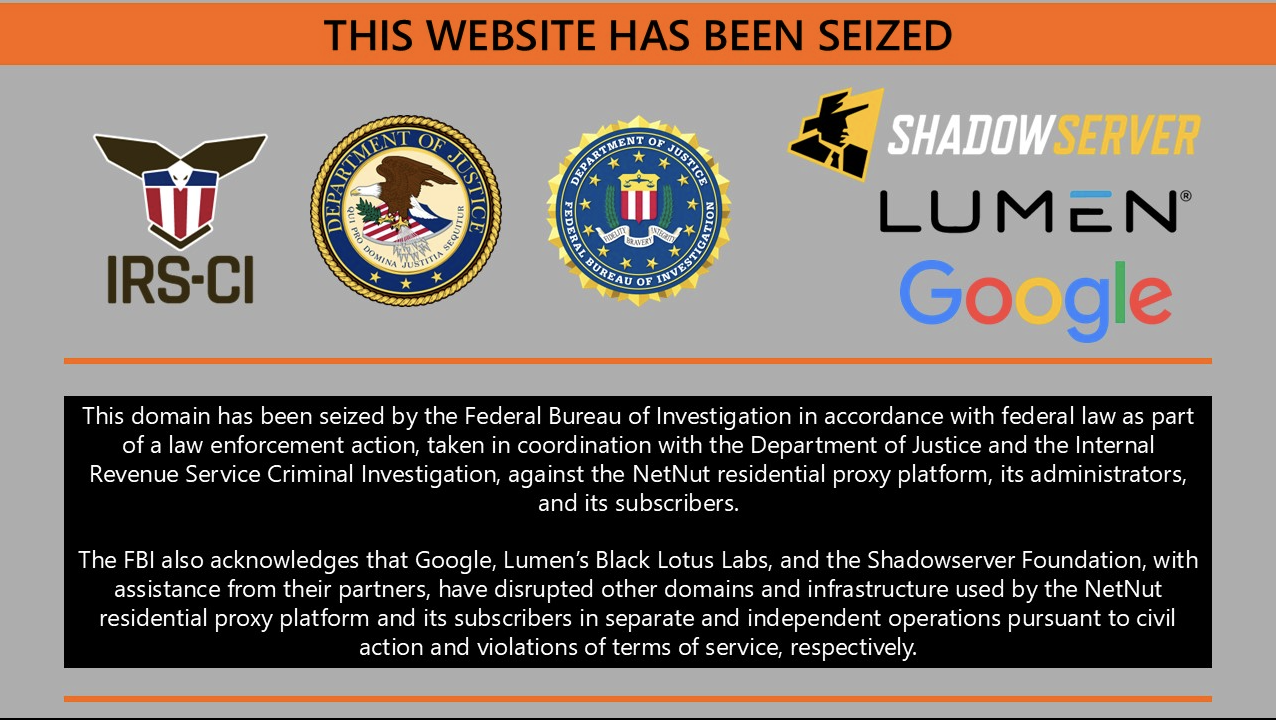
Many users started looking for a NetNut alternative after NetNut's primary website displayed an FBI seizure notice.
A reliable replacement should offer high-quality residential IPs, sticky sessions, geo-targeting, HTTP/HTTPS/SOCKS5 support, strong uptime, transparent pricing, and responsive support.
Nstproxy is an excellent all-around alternative, offering Residential, Static ISP, Mobile, Datacenter, IPv6, and Unlimited Residential proxies on one platform.
Oxylabs and Bright Data are strong enterprise-grade options but are generally more expensive and complex.
ScrapingBee and Zenscrape are better choices if you prefer a managed scraping API instead of direct proxy infrastructure.
The best alternative depends on whether you need rotating residential IPs, static ISP proxies, mobile proxies, datacenter proxies, or a scraping API.
Lead-in
If you are searching for a NetNut alternative, there is a good chance you recently encountered the FBI seizure notice displayed on NetNut's primary website. The notice states that the domain was seized as part of a U.S. federal law enforcement action, leaving many existing users wondering how to maintain their proxy infrastructure and whether they should migrate to another provider.
For businesses that rely on proxies every day, this is more than just a website issue. Proxy infrastructure often sits at the center of web scraping, SEO monitoring, price tracking, ad verification, AI data collection, and multi-account operations. If your provider becomes unavailable or its services are disrupted, automated workflows may fail, regional testing may become unreliable, and long-running account sessions may be interrupted. That is why many users are now looking for a reliable NetNut replacement.
A good alternative should do more than simply advertise a large IP pool. It should provide the features users depended on: high-quality residential IPs, sticky and static sessions, precise geo-targeting, HTTP/HTTPS/SOCKS5 support, high uptime, transparent pricing, and responsive customer support. In other words, migrating should be as seamless as possible, without requiring major changes to your existing workflows.
For most users, Nstproxy is one of the strongest NetNut alternatives because it offers multiple proxy types on a single platform, including Residential, Static ISP, Mobile, Datacenter, IPv6, and Unlimited Residential Proxies.
If you are searching for a NetNut alternative, there is a good chance you are not just comparing proxy prices. You may be looking for a replacement because NetNut’s main website is no longer functioning as a normal service site. As of July 7, 2026, netnut.io displays a seizure notice from the Federal Bureau of Investigation, which means many users now have an urgent question: what proxy provider can replace NetNut without interrupting their scraping, SEO monitoring, ad verification, market research, or account-based workflows?
For teams that depended on NetNut, this is not a small inconvenience. A proxy provider sits inside real business operations. If the website, dashboard, documentation, billing access, or support channel becomes unavailable, users need a backup plan fast. They need clean residential IPs, stable sessions, location targeting, HTTP/SOCKS5 support, and a provider that can be configured quickly inside existing tools.
That is why this guide focuses on practical NetNut replacement options, not just a generic list of proxy companies. We will compare the best NetNut alternatives in 2026, explain what features matter most during migration, and show why Nstproxy is one of the strongest choices for users who need residential, static ISP, mobile, datacenter, IPv6, and unlimited residential proxy options in one place.
What Makes a Good NetNut Alternative?
A good NetNut alternative should not only “have residential proxies.” It should help you continue the same workflows with less downtime and fewer changes to your stack.
If you were using NetNut for web scraping, you need rotating residential proxies, request stability, clean IPs, and predictable bandwidth pricing. If you were using it for account sessions, you need sticky sessions or static ISP proxies. If you were using it for localized testing, you need accurate country, city, or region targeting.
The right alternative should cover five areas.
Proxy type coverage.
A replacement should offer residential proxies at minimum. Ideally, it should also support ISP proxies, mobile proxies, datacenter proxies, and SOCKS5.
Session control.
Rotating IPs are useful for scraping. Sticky or static IPs are better for logged-in sessions, dashboards, and account-based workflows.
Geo-targeting.
If you run SEO checks, ad verification, ecommerce monitoring, or regional testing, location accuracy matters.
Integration flexibility.
You should be able to use the proxy in browsers, proxy managers, scraping scripts, APIs, and antidetect browsers without rewriting your workflow.
Pricing clarity.
During migration, unpredictable proxy costs can become a real problem. Clear bandwidth or per-IP pricing makes testing and scaling easier.
Best NetNut Alternatives in 2026
1. Nstproxy — Best Overall NetNut Alternative
Best for: users who need flexible proxy infrastructure for scraping, SEO monitoring, ad verification, ecommerce research, account management, and automation workflows.
Nstproxy is the best overall NetNut alternative because it gives users a broad proxy stack instead of only one replacement product. This is important because NetNut users may have different workflows. Some need rotating residential IPs. Some need static ISP sessions. Some need mobile IPs for mobile-first platforms. Others need high-speed datacenter or IPv6 proxies for lower-risk, high-volume tasks.
Nstproxy supports Residential Lite, Residential Prime, Static ISP, Mobile, Datacenter, IPv6, and Unlimited Residential proxies. Its official website lists 220M+ IPs, 195+ countries and regions, HTTP/SOCKS5 support, city and ASN targeting, and products designed for scraping, SEO monitoring, ad verification, ecommerce, price monitoring, and account management.
This makes Nstproxy especially useful for users migrating from NetNut because you do not have to choose a single proxy model for every job. You can rebuild your workflow by task.
Use Residential Prime for higher-trust scraping and ad verification. Use Residential Lite for cost-sensitive data collection. Use Static ISP proxies when you need stable long sessions. Use Mobile proxies when mobile identity matters. Use Datacenter or IPv6 proxies for speed-focused or low-risk scraping tasks.
Multiple proxy types in one platform.
NetNut users often need more than rotating residential proxies. Nstproxy lets you choose residential, ISP, mobile, datacenter, IPv6, or unlimited residential proxies depending on the workflow.
Strong fit for web scraping.
For users replacing NetNut scraping setups, Nstproxy provides rotating residential options, large IP coverage, and proxy products built for data collection.
Static ISP proxies for stable sessions.
If you used NetNut for long-running sessions or account-based workflows, Nstproxy Static ISP proxies are a strong match because they provide consistent IP identity without constant rotation.
Location targeting for business workflows.
Nstproxy supports wide country and regional coverage, which is useful for SEO monitoring, ad verification, ecommerce research, and localized testing.
HTTP/SOCKS5 integration.
Nstproxy can be configured in browsers, scripts, proxy managers, automation tools, and account management environments.
Lower migration friction.
Because Nstproxy supports several proxy products, users can test one workflow at a time instead of moving everything into a single proxy type.
Pros
Residential, ISP, Mobile, Datacenter, IPv6, and Unlimited Residential options
Good fit for scraping, SEO, ads, ecommerce, and account workflows
Sticky and rotating proxy use cases
HTTP/SOCKS5 support
Large global IP coverage
Flexible pricing structure
Easier to match proxy type to task
Cons
Users need to choose the correct proxy product for each workflow
Advanced setups may require proxy manager configuration
How to Migrate from NetNut to Nstproxy
Audit your current NetNut workflows.
List whether each workflow needs rotating residential IPs, sticky sessions, static IPs, mobile IPs, or high-speed datacenter traffic.
Choose the matching Nstproxy product.
Use Residential Prime for high-trust scraping, Residential Lite for cost-sensitive data collection, Static ISP for long sessions, Mobile for mobile-first platforms, and Datacenter or IPv6 for speed-focused tasks.
Copy your proxy credentials.
After creating your Nstproxy account, get the proxy host, port, username, and password from the dashboard.
Update your proxy configuration.
Replace NetNut credentials inside your scraper, proxy manager, browser profile, automation tool, or API client.
Test with a small workload first.
Run a limited test to check success rate, latency, CAPTCHA frequency, and location accuracy before scaling.
Assign proxy types by task.
Do not use the same rotation logic for every workflow. Use sticky or static IPs for logged-in sessions and rotating residential proxies for large-scale data collection.
2. Oxylabs
Best for: enterprise scraping and large-scale web data collection.
Oxylabs ranks prominently for NetNut alternative queries and positions itself as a premium replacement. It is a strong choice for enterprise users who need a large residential proxy pool, structured scraping tools, and dedicated support.
Oxylabs is especially suitable for companies with mature scraping infrastructure and larger budgets. If your team needs enterprise contracts, compliance processes, and advanced data collection support, it is worth considering.
Pros
Large residential proxy network
Strong enterprise support
Good for large-scale scraping
Advanced geo-targeting
Cons
Higher cost than many alternatives
May be too heavy for small teams or individual users
3. Bright Data
Best for: enterprise proxy infrastructure and advanced data operations.
Bright Data is another major NetNut alternative in the SERP. It offers a wide range of proxy and data collection products, including residential proxies, datacenter proxies, mobile proxies, ISP proxies, and scraping tools.
Bright Data is powerful, but it can feel complex if you only need a simple proxy replacement. It is best for companies that need advanced controls and have the technical resources to manage a larger platform.
Pros
Large proxy network
Multiple proxy products
Advanced data collection tools
Strong enterprise positioning
Cons
Complex pricing and setup
More than many small teams need
4. ScrapingBee
Best for: users who want a scraping API instead of managing proxies directly.
ScrapingBee ranks first in the live SERP for NetNut alternative. It is different from raw proxy providers because it focuses on scraping API infrastructure. That means users can send requests through ScrapingBee and let the platform handle proxy rotation, browser rendering, and some anti-blocking complexity.
This is useful if your main goal is scraping web pages and you do not want to manage proxy pools manually.
Pros
Easy scraping API
Less proxy management required
Useful for developers who want faster setup
Good for rendered pages and scraping tasks
Cons
Not a direct raw proxy replacement
Less flexible for account sessions or custom proxy routing
5. SOAX
Best for: geo-targeted residential and mobile proxy workflows.
SOAX appears in the NetNut alternatives SERP and is known for location filtering and proxy control. It can be useful for ad verification, localized testing, market research, and scraping tasks where location accuracy matters.
SOAX is a solid option if your NetNut usage depended heavily on specific geographic targeting.
Pros
Strong geo-targeting
Residential and mobile proxy options
Useful for localized workflows
Clean dashboard
Cons
Pricing can add up with larger usage
May require testing for strict websites
6. IPRoyal
Best for: budget-conscious users looking for a simpler NetNut alternative.
IPRoyal has a dedicated NetNut alternative page in the SERP. It is often chosen by users who want a more affordable and straightforward residential proxy option.
It may not have the same enterprise positioning as Oxylabs or Bright Data, but it can be a practical option for smaller teams, freelancers, and users who want to control proxy costs.
Pros
Affordable entry point
Easy to start
Residential proxy options
Good for smaller workflows
Cons
Performance may vary by target website
Less suited for complex enterprise proxy architecture
7. Zenscrape
Best for: users who want web scraping API support with proxy features.
Zenscrape is similar to ScrapingBee in that it is more of a scraping API alternative than a direct raw proxy replacement. It can help users who want to extract web data without manually managing proxy rotation, headers, and browser rendering.
It is a good option if your NetNut workflow was mostly scraping-focused and you are open to changing from proxy management to API-based scraping.
Pros
API-based scraping workflow
Proxy handling built into the service
Easier for developers who want quick integration
Cons
Not ideal if you need raw proxy credentials
Less flexible for browser profile or account workflows
8. NodeMaven
Best for: users looking for residential proxy replacement after NetNut disruption.
NodeMaven appeared in the SERP with recent content specifically discussing NetNut disruption and alternatives. It may appeal to users who want a replacement provider focused on residential proxy access and migration messaging.
As with any alternative provider, users should test IP quality, success rate, pricing, and support before moving large workloads.
Pros
Directly positioned as a NetNut replacement
Residential proxy focus
Relevant to users migrating after disruption
Cons
Should be tested before large-scale migration
Less established than older enterprise proxy brands
NetNut Alternative Comparison Table
Provider
Best For
Proxy/API Type
Pros
Cons
Nstproxy
Flexible proxy migration
Residential, ISP, Mobile, Datacenter, IPv6
Multiple proxy types, good for scraping and stable sessions
Requires choosing the right product
Oxylabs
Enterprise scraping
Residential proxies and scraping tools
Large pool, enterprise support
Higher cost
Bright Data
Advanced data operations
Residential, ISP, Mobile, Datacenter, tools
Very broad platform
Complex setup
ScrapingBee
Scraping API users
Scraping API
Easy setup, less proxy management
Not raw proxy-first
SOAX
Geo-targeted workflows
Residential and Mobile proxies
Strong location filtering
Can be costly at scale
IPRoyal
Budget users
Residential proxies
Affordable and simple
Variable performance by use case
Zenscrape
API-based scraping
Scraping API
Developer-friendly
Less flexible for proxy routing
NodeMaven
NetNut migration users
Residential proxies
Relevant replacement positioning
Needs testing before scaling
How to Choose the Right NetNut Alternative
The best NetNut alternative depends on what you were using NetNut for.
If you were using NetNut for large-scale scraping, choose a provider with rotating residential proxies, stable success rates, and bandwidth pricing that makes sense at scale. Nstproxy Residential Prime, Oxylabs, and Bright Data are strong candidates.
If you were using NetNut for account-based workflows, do not rely only on rotating residential IPs. You need stable sessions. Nstproxy Static ISP proxies are a better fit because they provide a consistent IP for longer sessions.
If you were using NetNut for localized SEO monitoring, choose a provider with accurate regional targeting. Nstproxy, SOAX, Bright Data, and Oxylabs are worth comparing.
If you were using NetNut for ad verification, prioritize residential IP quality, country coverage, and city-level targeting. Nstproxy Residential Prime is a strong fit here because it is designed for more complex, high-trust scenarios.
If you were using NetNut for developer scraping, consider whether you want raw proxies or a scraping API. Nstproxy gives you direct proxy control. ScrapingBee and Zenscrape are better if you want API abstraction.
FAQs
Q1. Why was NetNut seized?
According to the notice displayed on NetNut's primary website, the domain was seized by the FBI as part of a U.S. federal law enforcement action. At the time of writing, no further official details about the case have been publicly released.
Q2. What is the best NetNut alternative?
Nstproxy is the best overall NetNut alternative for most users because it offers multiple proxy types, including residential, static ISP, mobile, datacenter, IPv6, and unlimited residential proxies. This makes it suitable for scraping, SEO monitoring, ad verification, account sessions, and market research.
Q3. Should I choose proxies or a scraping API?
Choose proxies if you want direct control over IPs, sessions, tools, and routing. Choose a scraping API like ScrapingBee or Zenscrape if you want the provider to handle more of the scraping infrastructure for you.
Q4. What proxy type should I use after leaving NetNut?
Use rotating residential proxies for scraping, static ISP proxies for long sessions, mobile proxies for mobile-first platforms, and datacenter or IPv6 proxies for speed-focused lower-risk tasks.
Q5. Is NetNut still working?
The availability of NetNut services may vary. However, many users began searching for alternatives after NetNut's primary website displayed an FBI seizure notice. If uninterrupted proxy access is critical for your business, it's advisable to have an alternative provider ready to minimize potential downtime.
Conclusion
Searching for a NetNut alternative in 2026 is no longer just about comparing proxy providers. For many businesses, it's about maintaining uninterrupted access to the infrastructure that powers web scraping, SEO monitoring, market research, ad verification, and other automated workflows.
When choosing a replacement, look beyond the size of the IP pool. Consider factors such as network reliability, residential IP quality, geo-targeting options, session stability, protocol support, pricing, and customer support. A provider that fits your existing workflows can make migration much smoother.
Nstproxy offers a comprehensive proxy platform with Residential, Static ISP, Mobile, Datacenter, IPv6, and Unlimited Residential proxies, making it a practical solution for teams with diverse use cases. Enterprise users may also consider providers like Oxylabs or Bright Data, while ScrapingBee and Zenscrape are suitable for those who prefer managed scraping APIs.
If your priority is to move away from NetNut with minimal disruption, choosing a provider that supports multiple proxy types and scalable infrastructure will help ensure your projects continue running smoothly.