A proxy server acts as a crucial intermediary between a user and the internet, handling requests and responses while keeping the user's real IP address hidden. However, the term "proxy" is a broad umbrella covering a diverse range of technologies, each with unique characteristics, anonymity levels, and ideal use cases.
Choosing the wrong type of proxy can lead to blocks, slow speeds, or compromised security. This comprehensive guide will explore the various categories of proxy servers, detailing their functions, advantages, and disadvantages, and show why Nstproxy is positioned to provide the best solution for every need.
Why Use Proxy Servers?
Before diving into the types, it's important to understand the core benefits that drive the need for proxies:
- Access to Websites and Data: Bypassing geo-restrictions and IP-based blocks to access public web data for market research, price monitoring, and competitor analysis.
- Security: Adding an extra layer of defense by filtering malicious traffic and preventing direct exposure of internal network details.
- Privacy and Anonymity: Masking the user's real IP address to prevent tracking and maintain a low digital footprint.
- Performance Optimization: Caching frequently accessed data to reduce bandwidth usage and improve load times.
Proxy Types Based on Anonymity Level
Proxies are often categorized by how much information they reveal about the user and the fact that a proxy is being used.
1. Transparent Proxies
A Transparent Proxy does not attempt to hide your real IP address and explicitly informs the destination server that a proxy is in use.
- Anonymity: None. The server sees your real IP (via the
X-Forwarded-Forheader) and knows a proxy is involved (via theViaheader). - Use Cases: Content filtering, caching, and network performance optimization in corporate or school environments.
- Nstproxy's Stance: We focus on high-anonymity solutions, as transparent proxies offer no privacy benefit.
2. Anonymous Proxies
Anonymous Proxies provide a middle ground by hiding your actual IP address but still disclosing that a proxy is being used.
- Anonymity: Moderate. The server sees a fake IP address but still detects the presence of a proxy.
- Use Cases: Accessing geo-restricted content where the target site has basic anti-bot measures.
- Limitation: Easily detected by advanced anti-bot systems.
3. Elite Proxies
Elite Proxies offer the highest level of anonymity by removing all proxy-related headers. They make the request appear as if it originates from a real person with no intermediary server involved.
- Anonymity: Highest. The request looks identical to one made by a regular user.
- Use Cases: Web scraping, automated browsing, and bypassing anti-bot mechanisms on heavily protected websites.
- Nstproxy's Solution: Our Residential and Mobile Proxies function as elite proxies, ensuring maximum stealth and success rates.
Proxy Types Based on IP Source
The source of the IP address is the most critical factor determining a proxy's trustworthiness and success rate.
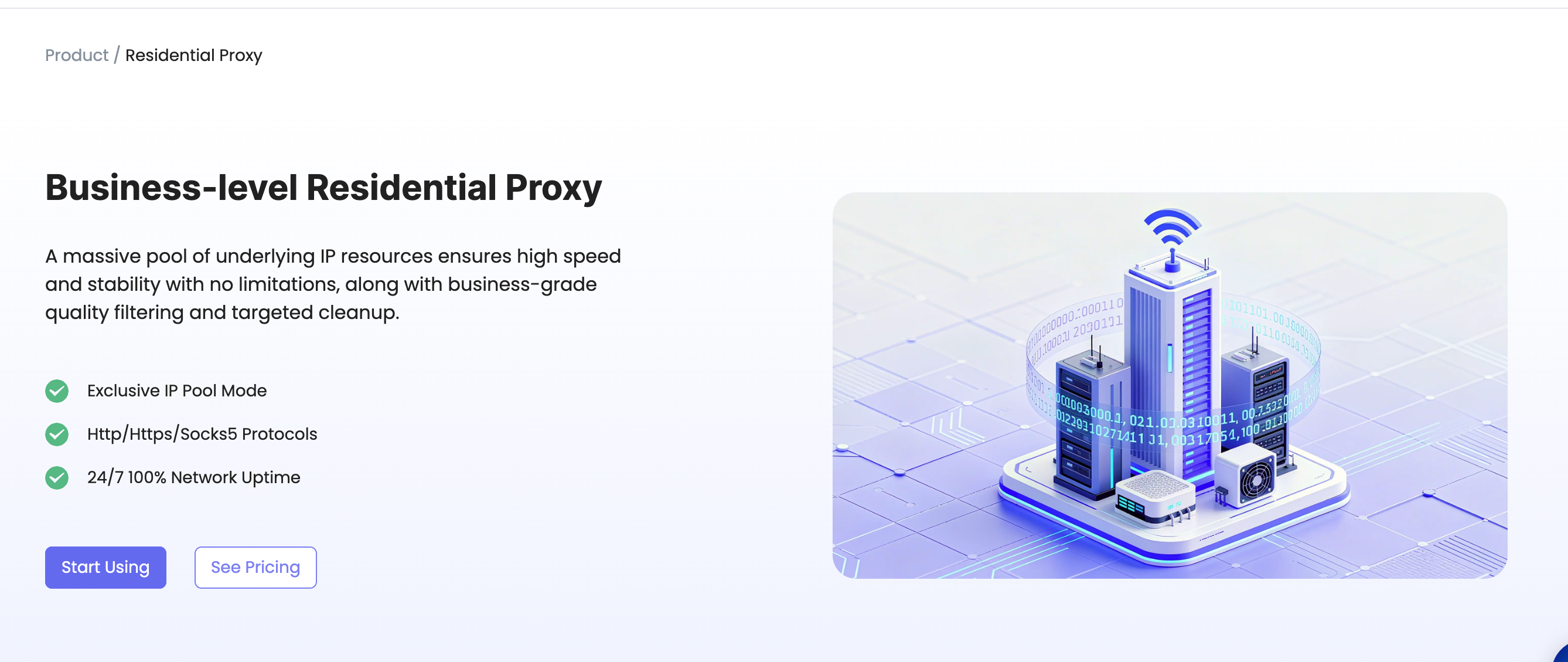
1. Residential Proxies
Residential Proxies use IP addresses assigned by Internet Service Providers (ISPs) to real home users.

- Source: Genuine home networks.
- Pros: High trust score, virtually indistinguishable from regular users, excellent for bypassing anti-bot systems.
- Cons: Generally more expensive and can be slower than datacenter proxies.
- Ideal For: Web scraping, ad verification, account management, and market research.
2. Mobile Proxies
Mobile Proxies use IP addresses assigned by cellular network carriers to mobile devices.
- Source: 3G/4G/5G mobile networks.
- Pros: The highest level of trust and anonymity, as mobile networks use CGNAT (sharing one IP among many users), making it nearly impossible to block.
- Cons: Highest cost, potentially variable speed.
- Ideal For: Social media automation, mobile app testing, and high-security bypassing.
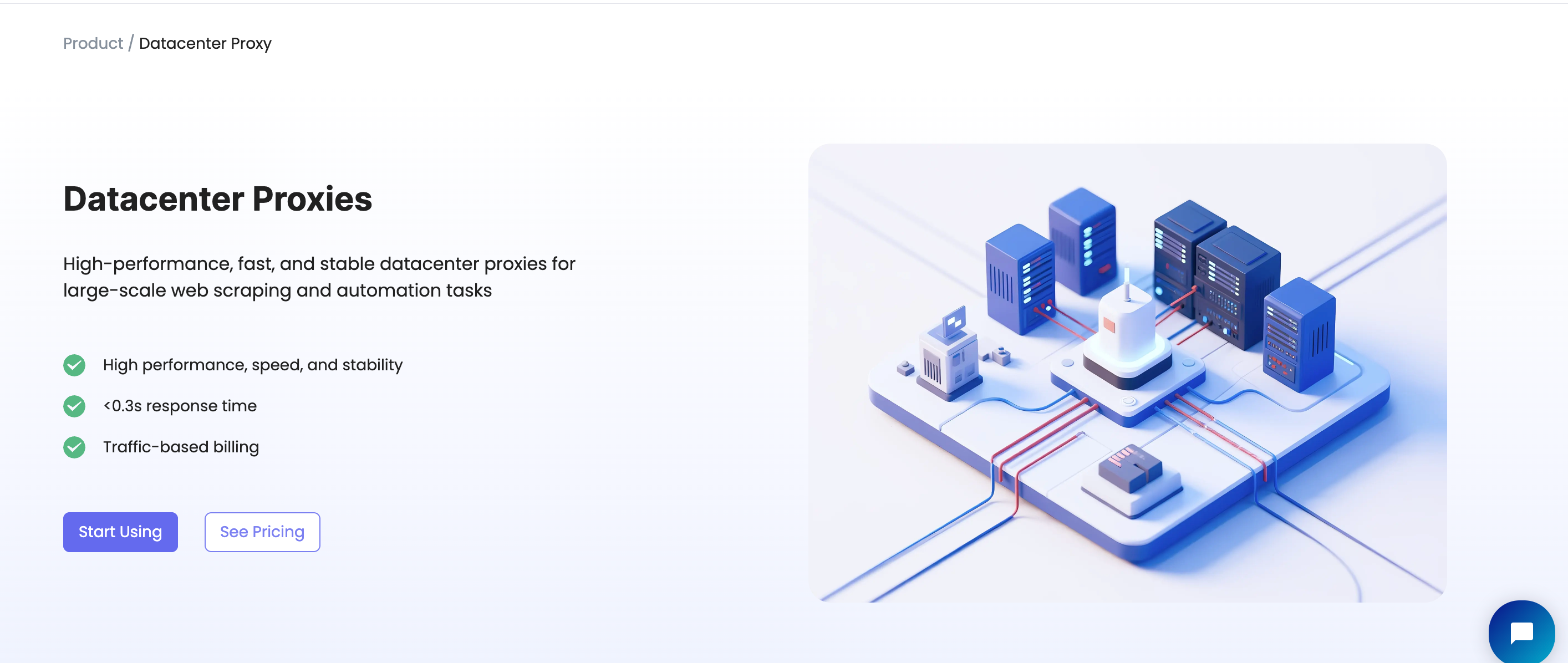
3. Datacenter Proxies
Datacenter Proxy are hosted in commercial cloud datacenters and are not associated with an ISP or a physical location.

- Source: Commercial hosting providers.
- Pros: Extremely fast, low cost, easy to scale.
- Cons: Easily detectable by anti-bot systems, high risk of being blocked on protected sites.
- Ideal For: High-speed, low-anonymity tasks like price aggregation on unprotected sites.
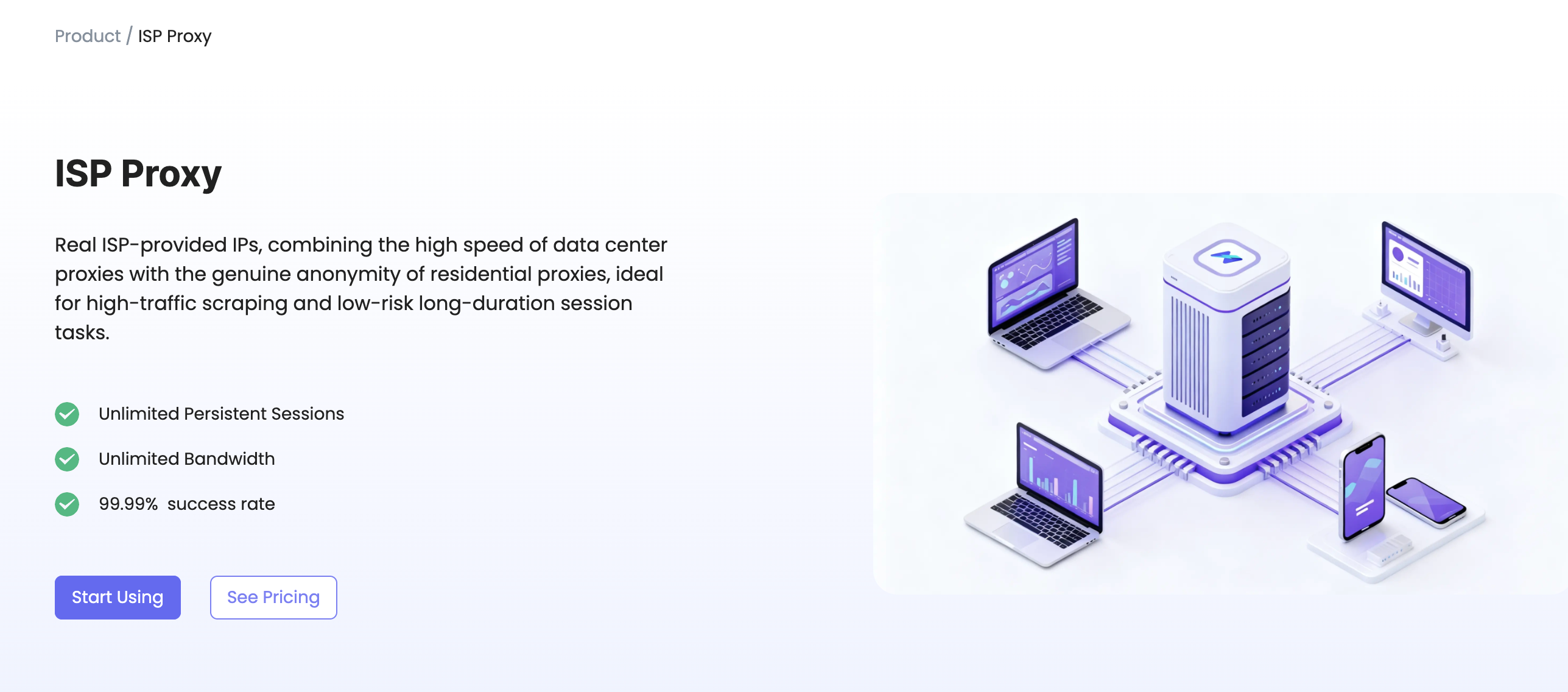
4. ISP Proxies (Static Residential)
ISP Proxy are IP addresses registered as residential but hosted on a server in a datacenter. They offer a blend of speed and legitimacy.

- Source: ISP-assigned IPs hosted in a datacenter.
- Pros: High speed (datacenter infrastructure) with high trust (residential IP registration).
- Cons: More expensive than pure datacenter proxies.
- Ideal For: Tasks requiring speed and credibility, such as managing multiple online accounts or high-frequency scraping.
Proxy Types Based on Traffic Flow
Proxies can also be categorized by their position in the network flow.
| Proxy Type | Position | Function | Use Case |
|---|---|---|---|
| Forward Proxy | Between the client and the internet | Routes client requests to the internet. | Client-side anonymity, geo-unblocking, web scraping. |
| Reverse Proxy | In front of the web server | Routes internet requests to the web server. | Server-side load balancing, security, caching. |
Take a Quick Look
Protect your online privacy and provide stable proxy solution. Try Nstproxy today to stay secure, anonymous, and in control of your digital identity.
Why Nstproxy Offers the Best Proxy Solution
The modern internet demands the highest quality proxies. Nstproxy focuses on providing the most reliable and effective solutions, primarily in the high-trust categories:
- Residential & Mobile Focus: We specialize in Residential and Mobile Proxies, which are essential for tasks requiring genuine anonymity and high success rates against modern anti-bot technologies.
- Massive, Clean IP Pool: Our network is constantly maintained to ensure a large pool of clean, non-flagged IPs, minimizing the risk of IP bans.
- Flexible Rotation: We offer advanced rotation options, allowing you to choose between rotating IPs for scraping or static IPs for account management.
- Unmatched Reliability: Our infrastructure is built for speed and stability, ensuring your operations run smoothly and efficiently, regardless of the scale.
By choosing Nstproxy, you are selecting a provider that understands the nuances of proxy technology and delivers the elite-level anonymity and performance required for today's digital landscape.
Try NSTPROXY Today
Protect your online privacy and provide stable proxy solution. Try Nstproxy today to stay secure, anonymous, and in control of your digital identity.
Frequently Asked Questions (Q&A)
Q1: Which proxy type is best for web scraping?
A: Residential Proxies are generally the best for web scraping because their IPs are seen as legitimate by target websites, drastically reducing the chance of being blocked. For scraping highly protected sites or mobile apps, Mobile Proxies are the superior choice.
Q2: What is the main difference between Static Residential and Rotating Residential Proxies?
A: Rotating Residential Proxies change the IP address with every request or at a set interval, which is ideal for high-volume scraping. Static Residential Proxies (ISP Proxies) maintain the same IP address for a long period, which is better for tasks like account management where a consistent IP is required.
Q3: Are free proxies a type of proxy server?
A: Yes, they are a type of proxy, but they are almost always Transparent or low-quality Anonymous proxies. They are highly discouraged due to severe security risks, slow speeds, and high failure rates.
Q4: What is the role of a proxy in load balancing?
A: A Reverse Proxy is used for load balancing. It sits in front of multiple web servers and distributes incoming client requests across them, ensuring no single server is overwhelmed and improving the overall reliability and performance of the service.
Q5: Does Nstproxy offer SOCKS5 support?
A: Yes, Nstproxy supports the SOCKS5 protocol across its network. SOCKS5 is often preferred because it can handle all types of network traffic, not just HTTP/HTTPS, offering greater flexibility and performance.